Avance Fitness Platform
- Role
- Product Designer · Interaction Design
- Timeline
- 2024 · 3 months
- Platform
- iOS · Android · Web
- Ownership
- Product design, interaction modeling, user flows, wireframes
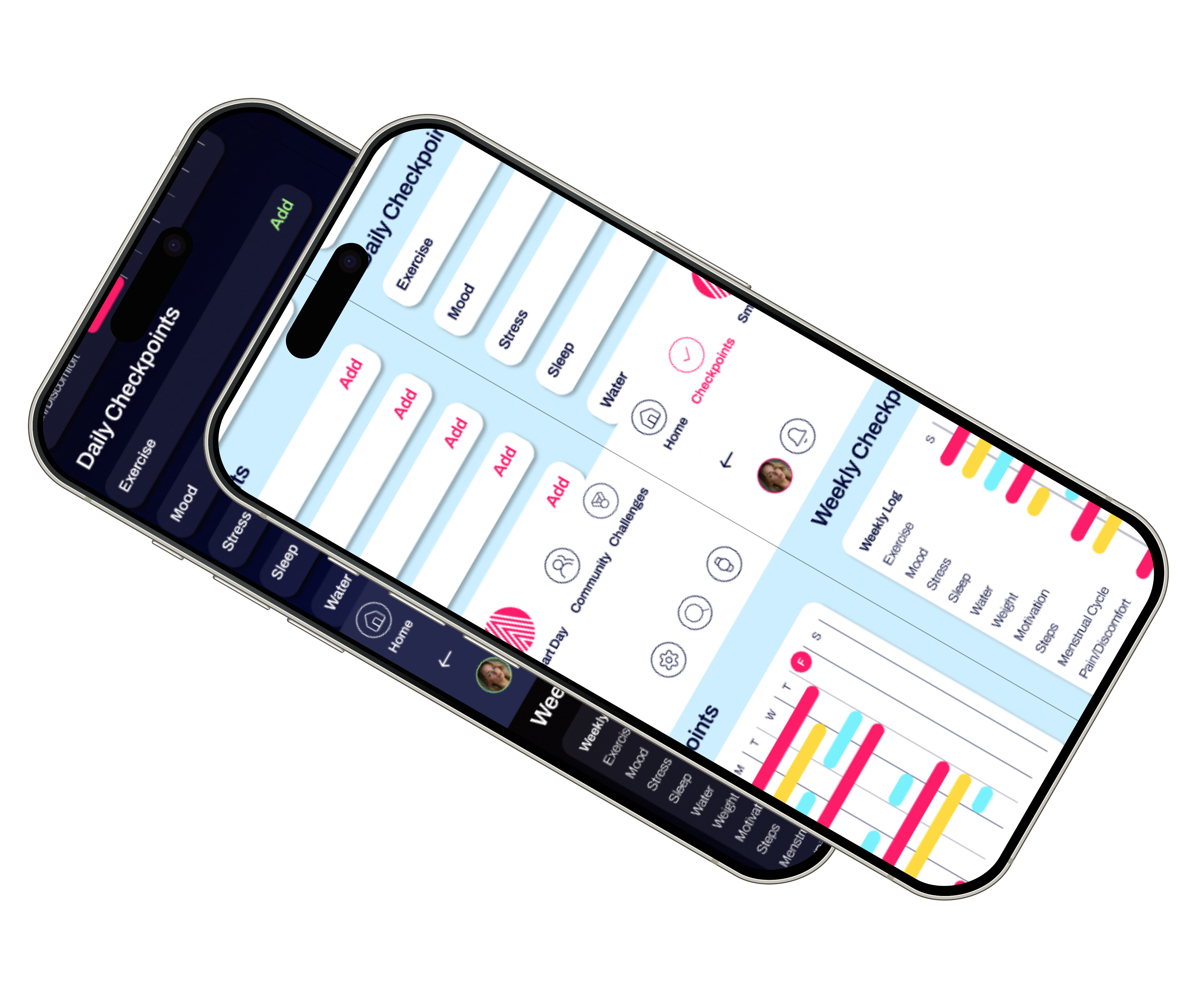
Overview
Avance is a speculative product design concept exploring a question I find genuinely interesting: how would a fitness platform work if it actually adapted to you, not just your goals, but your recovery, your schedule variability, and your performance trajectory over time?
This project was self-initiated to explore adaptive coaching interaction patterns, AI transparency in a fitness context, and the design of a system that respects the complexity of athletic performance.
Most fitness apps track what you did. Avance is designed to shape what you do next, with enough transparency that you understand why.
Problem
Static plans in a dynamic life
Most training platforms operate on static programming: a 12-week plan handed to the user on day one, with no mechanism to account for the fact that life doesn't behave like a training block. You get sick. You travel. You have a great week and a terrible one. The plan stays the same.
The gap I wanted to design into was the space between a rigid program and a fully custom coach: a system intelligent enough to adapt its recommendations, but transparent enough that users trust the adaptations and learn from them over time.
- Users abandon rigid programs when life interrupts, with no graceful recovery path
- Recovery data is collected but rarely used to modify training intensity
- Progress visualization focuses on output (weight lifted, pace) not trajectory (are you improving at the rate you should be?)
- Coaching feedback loops are absent; most apps have no way to learn from what worked for a given user
Decisions
Three bets that shaped the product
- Adaptive loop over static plans. The core model is a continuous cycle of plan, perform, recover, adapt. Each stage feeds data into the next. This meant designing for state changes, not fixed screens.
- Weekly brief as the primary surface. Rather than a real-time dashboard, the main interaction is a weekly synthesis: what happened, what changed, what's next. This resolved the tension between automated adaptation and user agency.
- Trajectory over snapshots. Progress visualization shows where you're headed, not just where you are. This reframes data as predictive and actionable rather than historical.
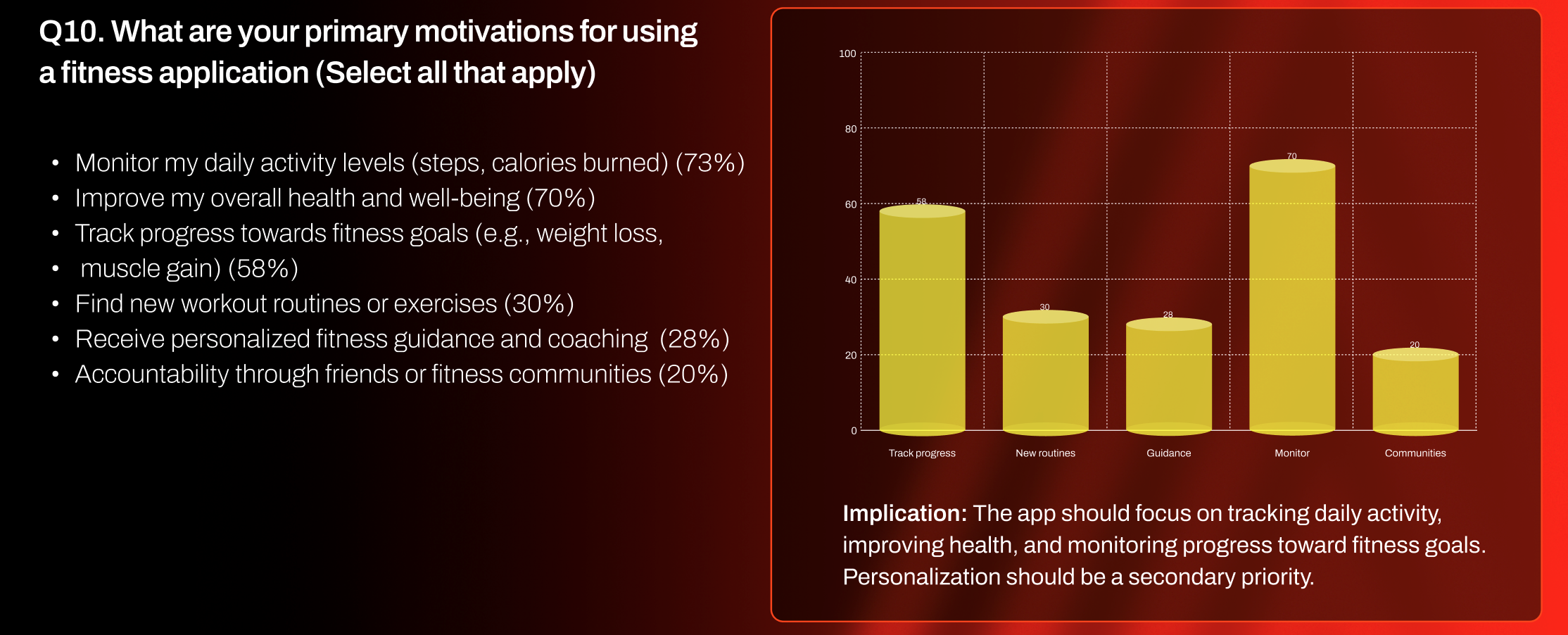
Research
Solution
Recovery-aware scheduling
Training sessions are scheduled with awareness of recovery state, derived from sleep data, HRV (where available), and self-reported feel, so the plan doesn't prescribe an intense session when signals suggest the user isn't recovered for it.
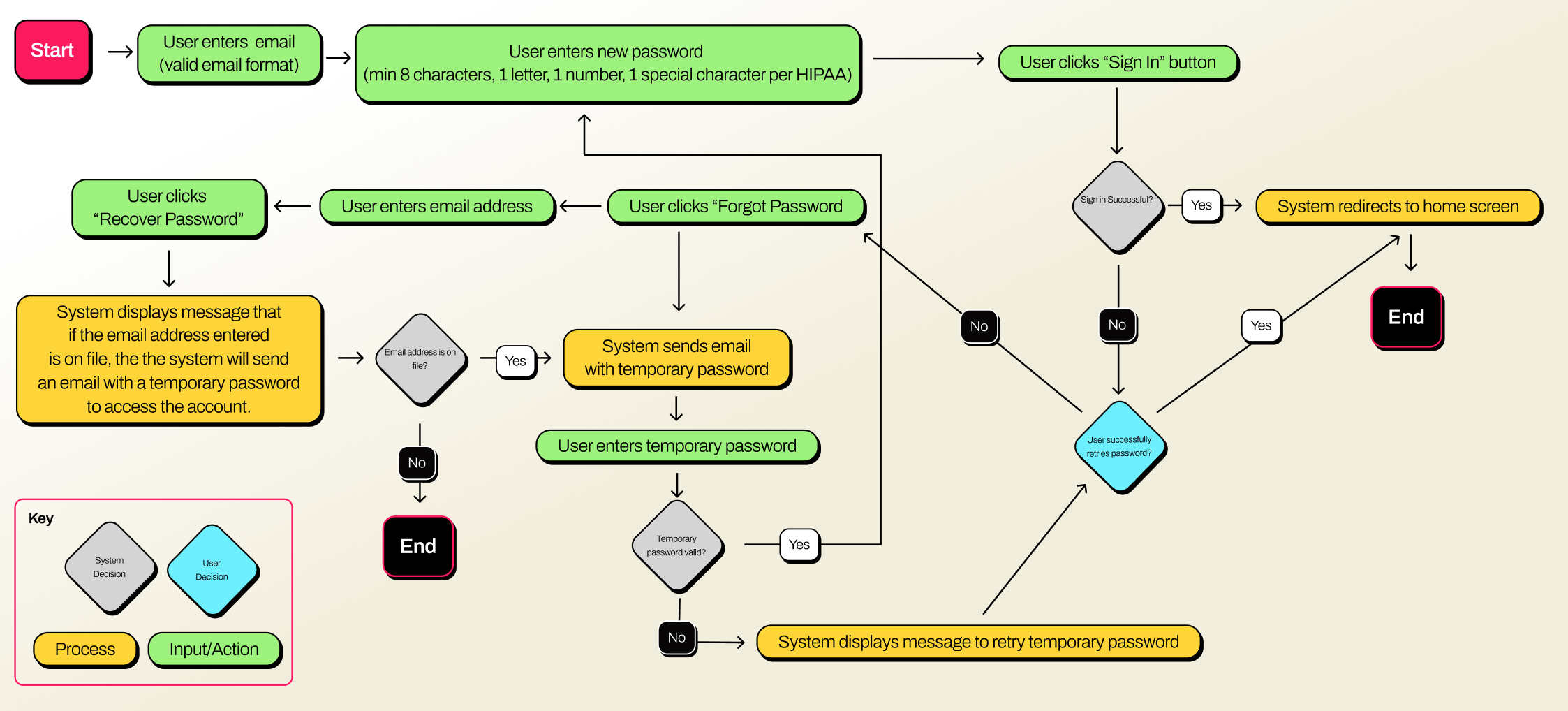
Transparent adaptation
Every time the system modifies a training recommendation, it surfaces a brief disclosure: "Reduced today's session intensity. Your recovery score this morning was below your 30-day average." The adaptation is automatic; the explanation is always present.
Plan negotiation
Users can push back on the system's recommendations, telling Avance they want to do the full session anyway, or swap for something different. The system accommodates the override and learns from it without penalizing the user.
Goal anchoring
All recommendations reference the user's stated goals explicitly, so the reasoning chain from goal to current state to recommendation is always visible.
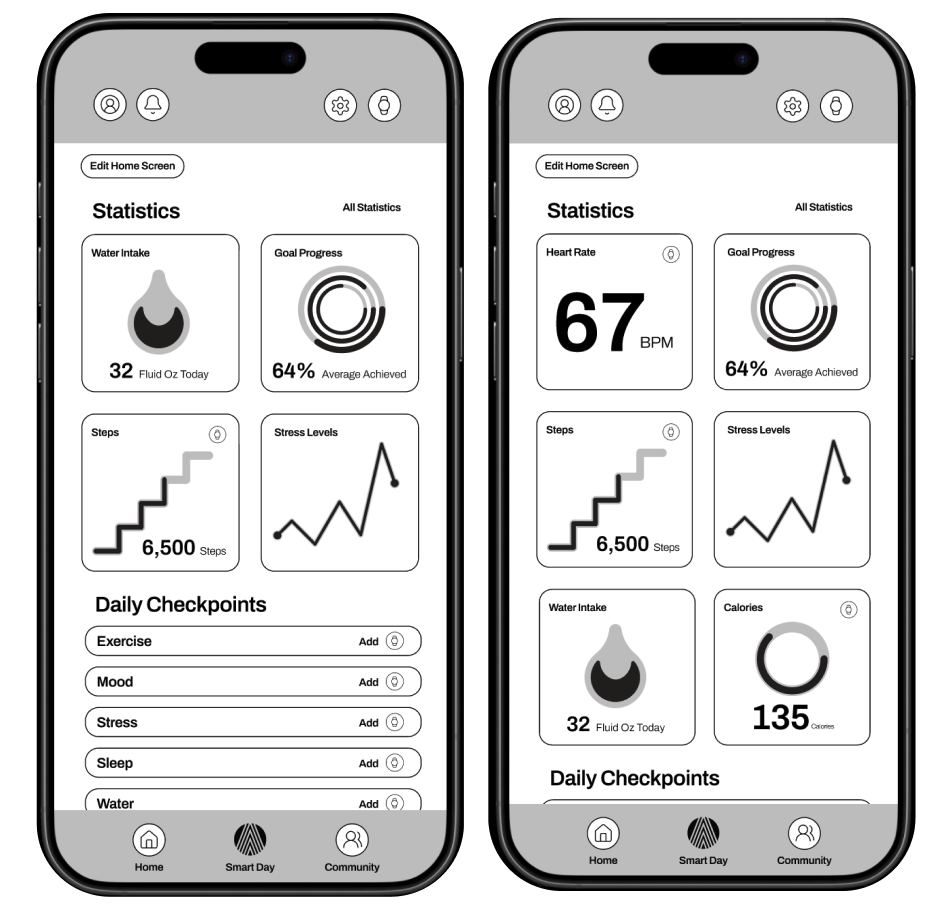
Outcomes
Avance is a concept, not a shipped product. But the design exercise surfaced a problem worth solving: the handoff of control between an AI system and the user. Making the system feel helpful without feeling presumptuous, and transparent without over-explaining itself.
The best AI interfaces feel like a thoughtful collaborator, not a recommendation engine. That's the bar Avance was designed to clear.